Visiting the Moai statues on Rapa Nui (Easter Island) represents a significant journey, demanding careful logistical and cultural preparation to fully appreciate these monumental ancestral figures. These monolithic human figures, carved by the Rapa Nui people between 1250 and 1500 CE, embody ancestral spirits and power, known as mana. Understanding their context, the best times to visit, and how to navigate the island ensures an impactful experience beyond just sightseeing. This guide outlines the essential elements for planning a complete Moai expedition, from site specifics to practical travel considerations.
Planning Your Moai Expedition
A trip to Rapa Nui requires more than just booking flights. Strategic planning around timing, transport, and site access is crucial for a smooth and enriching visit.
Optimal Travel Timing
The shoulder seasons, April-May and October-November, generally offer the most balanced conditions for visiting Rapa Nui. During these periods, the weather is typically mild, with fewer crowds compared to the peak summer months (December-February). The summer offers warmer temperatures but also higher humidity and visitor numbers, potentially impacting site accessibility and tour availability. The winter months (June-September) bring cooler temperatures and increased rainfall, which can make some unpaved roads challenging for rental vehicles and limit outdoor activities.
Navigating Rapa Nui
Upon arrival at Mataveri International Airport (IPC), visitors have several options for exploring the island. Renting a 4x4 vehicle provides the most flexibility, allowing independent access to remote sites and adherence to a personal schedule. Booking well in advance is recommended, especially during peak season, due to limited availability. Alternatively, guided tours offer structured itineraries with expert commentary, providing deeper historical and cultural insights. These tours range from full-day excursions covering major sites to specialized half-day trips. Bicycles are suitable for exploring areas closer to Hanga Roa, the main town, but the island's undulating terrain and unpaved roads to distant ahu (stone platforms) make them less practical for comprehensive exploration.
PRO TIP: Purchase your Rapa Nui National Park ticket immediately upon arrival at Mataveri International Airport. This ticket is mandatory for accessing all major Moai sites and is valid for a limited duration, typically 10 days. Critically, it permits only one entry to the Rano Raraku quarry and Orongo ceremonial village, so plan those visits carefully.
Essential Moai Sites to Experience
Each Moai site on Rapa Nui offers a distinct perspective on the island's history and the Moai's significance. Prioritizing these locations ensures a comprehensive understanding.
Rano Raraku: The Quarry of Giants
Rano Raraku is the most crucial site for understanding the Moai. This volcanic crater served as the primary quarry for nearly all Moai carved on the island. Over 400 statues remain here, in various stages of completion, some still embedded in the rock face. Walking among these unfinished giants provides direct insight into the carving techniques and the sheer scale of the undertaking. The sheer number and varied sizes of Moai here offer a unique visual narrative of their creation and abandonment.
Ahu Tongariki: The Iconic Lineup
Ahu Tongariki features the largest restored ahu on Rapa Nui, boasting 15 colossal Moai standing in a dramatic line. This site is particularly renowned for its sunrise views, where the rising sun illuminates the Moai from behind, creating striking silhouettes. The scale of these Moai, some reaching nearly 10 meters in height, underscores the societal organization and engineering prowess required for their erection. It's a key photographic location and a powerful representation of the Moai's grandeur.
Anakena Beach: Restored Moai and History
Anakena is one of Rapa Nui's few sandy beaches and holds significant historical importance as a landing site for the island's first settlers. It features Ahu Nau Nau, a restored platform with seven Moai, some still bearing faint traces of red pigment. Uniquely, four of these Moai wear pukao, the red scoria topknots representing hair or headdresses. The contrast of the ancient statues against the palm trees and turquoise water provides a different aesthetic context for the Moai.
Tahai: Sunset Views and Cultural Depth
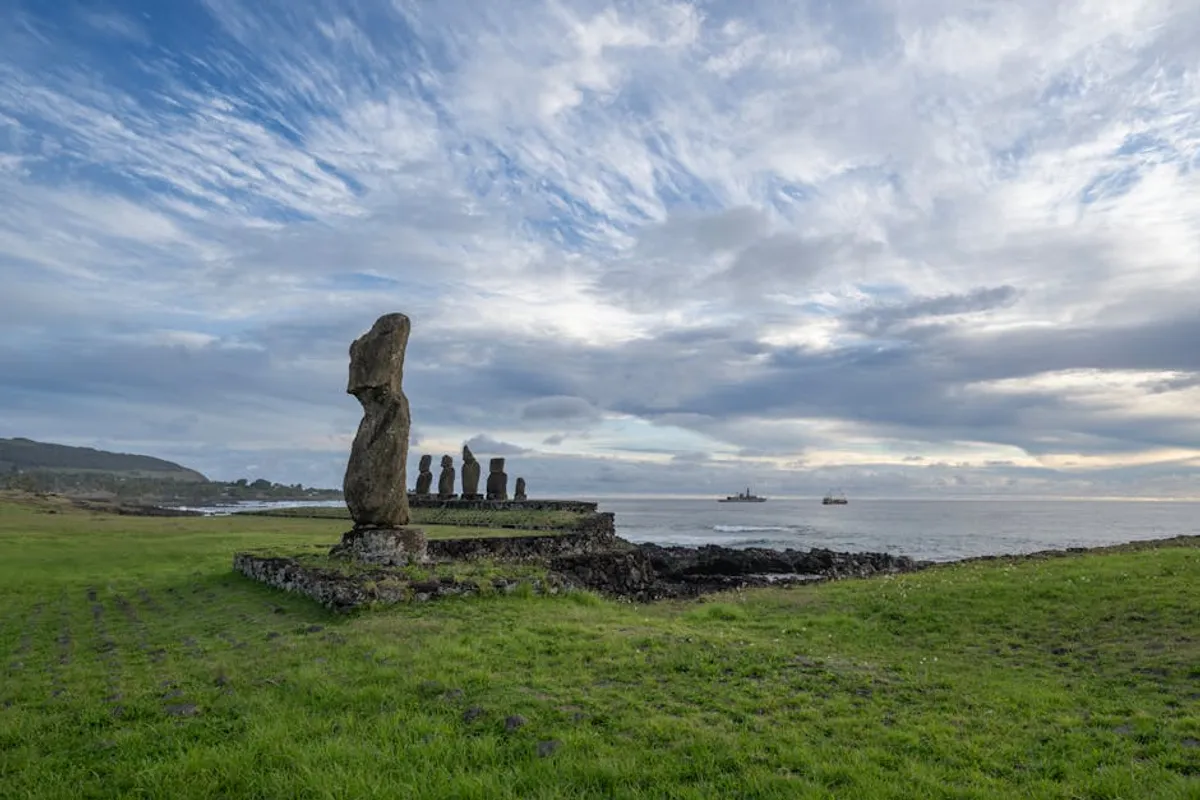
Located close to Hanga Roa, Tahai is an easily accessible archaeological complex featuring three distinct ahu. Ahu Tahai displays a single, well-preserved Moai with eyes, a rare feature. Ahu Ko Te Riku also has a Moai with eyes and a pukao. Ahu Vai Uri presents five Moai of varying sizes. This site is a popular spot for sunset viewing, offering a serene backdrop as the sun dips below the Pacific horizon, silhouetting the Moai.
Understanding Moai: History and Significance
The Moai were carved primarily from tuff, a compressed volcanic ash found at Rano Raraku. They represent deified ancestors (aringa ora), embodying the spiritual essence and power of lineage chiefs. Their placement on ahu, typically along the coast and facing inland, was strategic: they watched over the villages, protecting and blessing the community. The eyes of the Moai, made of white coral with obsidian or red scoria pupils, were only inserted during ceremonies, symbolizing the infusion of life and spiritual power. The eventual toppling of the Moai, largely between the 18th and 19th centuries, is attributed to internal conflicts and resource depletion, marking a period of societal upheaval.
Respecting the Rapa Nui Heritage
Visitors are expected to treat the Moai sites with the utmost respect. Walking on or touching the Moai, ahu, or any archaeological remains is strictly prohibited and carries significant fines. Designated pathways are in place at all sites for visitor safety and site preservation. Adhering to these regulations is crucial for protecting these irreplaceable cultural treasures and honoring the local Rapa Nui community's efforts in their preservation.
Preparing for Your Journey
Consider these practical items for a comfortable and respectful visit:
- Sturdy walking shoes: Essential for navigating uneven terrain at archaeological sites.
- Sun protection: Sunscreen, hat, and sunglasses are vital due to strong equatorial sun.
- Rain gear: A lightweight waterproof jacket or poncho is advisable, particularly during winter months.
- Insect repellent: Useful for evenings and visits to damper areas.
- Reusable water bottle: To stay hydrated and minimize plastic waste.
- Camera: For capturing the unique landscapes and Moai.
- Cash (CLP): While credit cards are accepted in Hanga Roa, smaller vendors or remote areas may require Chilean Pesos.
Maximizing Your Moai Visit
To fully immerse yourself in the Moai experience, allocate at least 3-5 full days on Rapa Nui. This allows ample time to explore the major sites without rushing, revisit favorite locations, and engage with local culture. Consider hiring a local guide for at least one full day to gain deeper insights into the island's history, folklore, and the nuances of the Rapa Nui language (Rapanui). Early morning visits to popular sites like Ahu Tongariki and Rano Raraku can provide a more tranquil experience before larger tour groups arrive.
Common Moai Travel Inquiries
How many Moai statues are there on Easter Island?
There are approximately 1,000 known Moai statues on Rapa Nui, with nearly 400 remaining at the Rano Raraku quarry and others dispersed across the island on ahu or scattered in various states.
Can visitors touch the Moai?
No, touching the Moai or their ahu platforms is strictly prohibited to prevent damage and preserve their cultural integrity. Visitors must stay on designated paths.
What is the significance of the Moai's eyes?
The Moai's eyes, made of white coral with obsidian or red scoria pupils, were only inserted during ceremonial periods. This act was believed to activate the Moai, imbuing them with spiritual power (mana) to watch over and protect the community.
How long should I plan to stay on Easter Island to see the Moai?
A minimum of 3 to 5 full days is recommended to adequately explore the major Moai sites, engage with the island's culture, and account for travel time and potential weather variations.